INSIGHT TRAP
Berlin Mehringdamn
Nov 22, 2024
Emma Adler, Fjorsk, Hannah Hallermann, and Tim Schmid

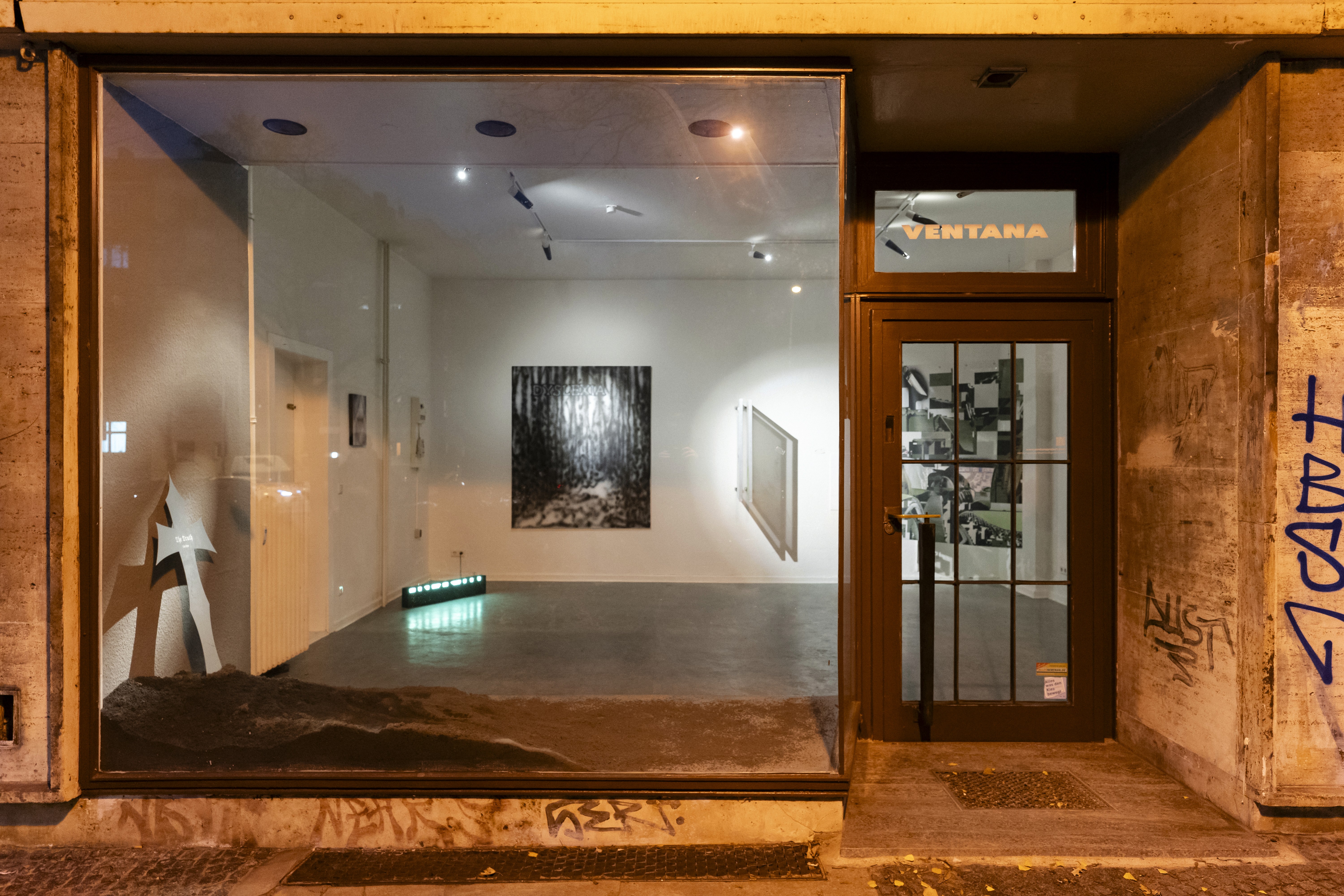
The group show INSIGHT TRAP explores the blurred and distorted realities of our time, shaped by an overwhelming flood of misinformation, dogma, preconceived opinions and technologically mediated heteronomy. A time where truth is elusive, the lines between right and wrong become blurred, where we feel trapped in our own inability to think and see clearly. The show wants to inspire our endeavor to clear the fog in our heads and to regain transparency and autonomy in our own thoughts and actions.
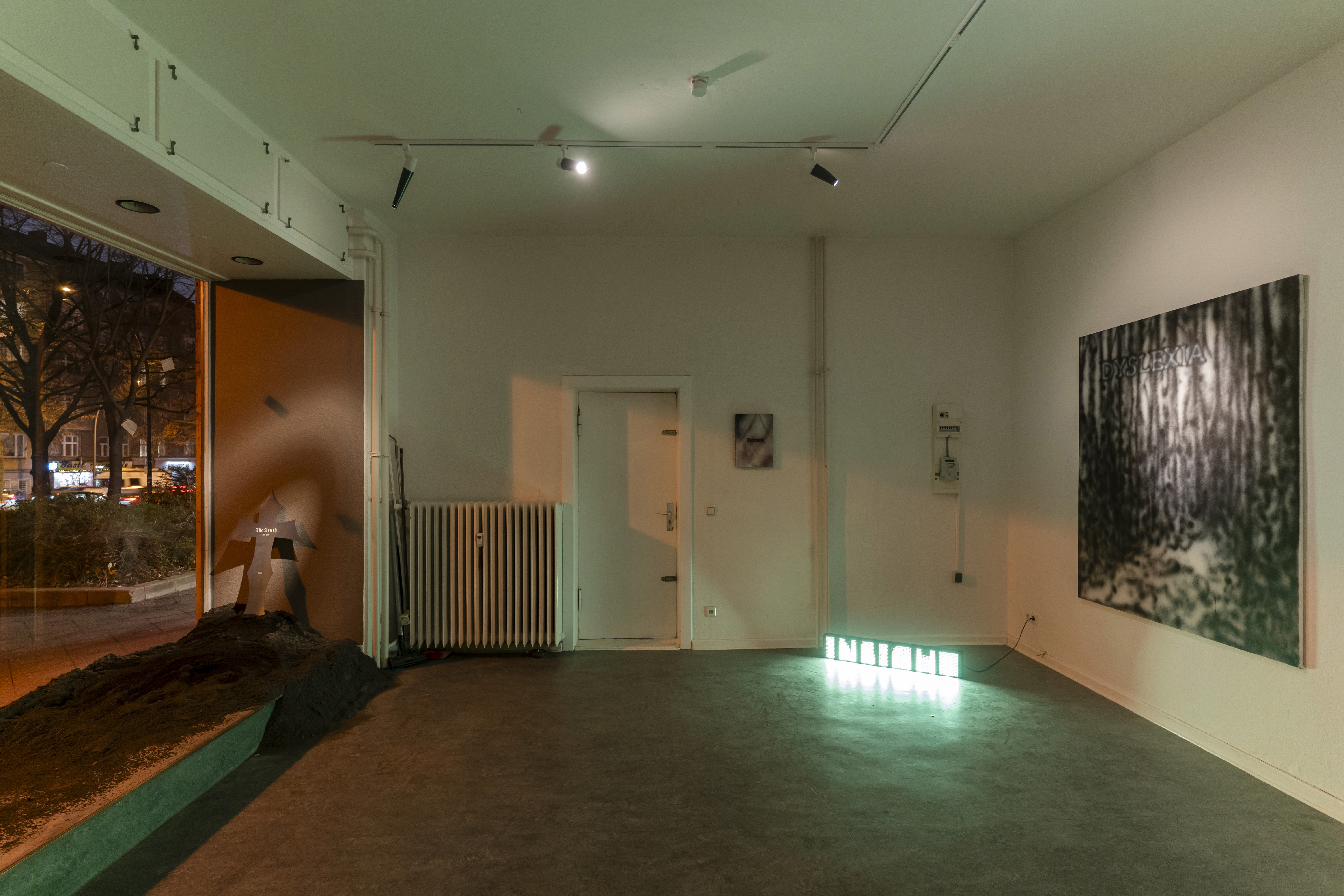
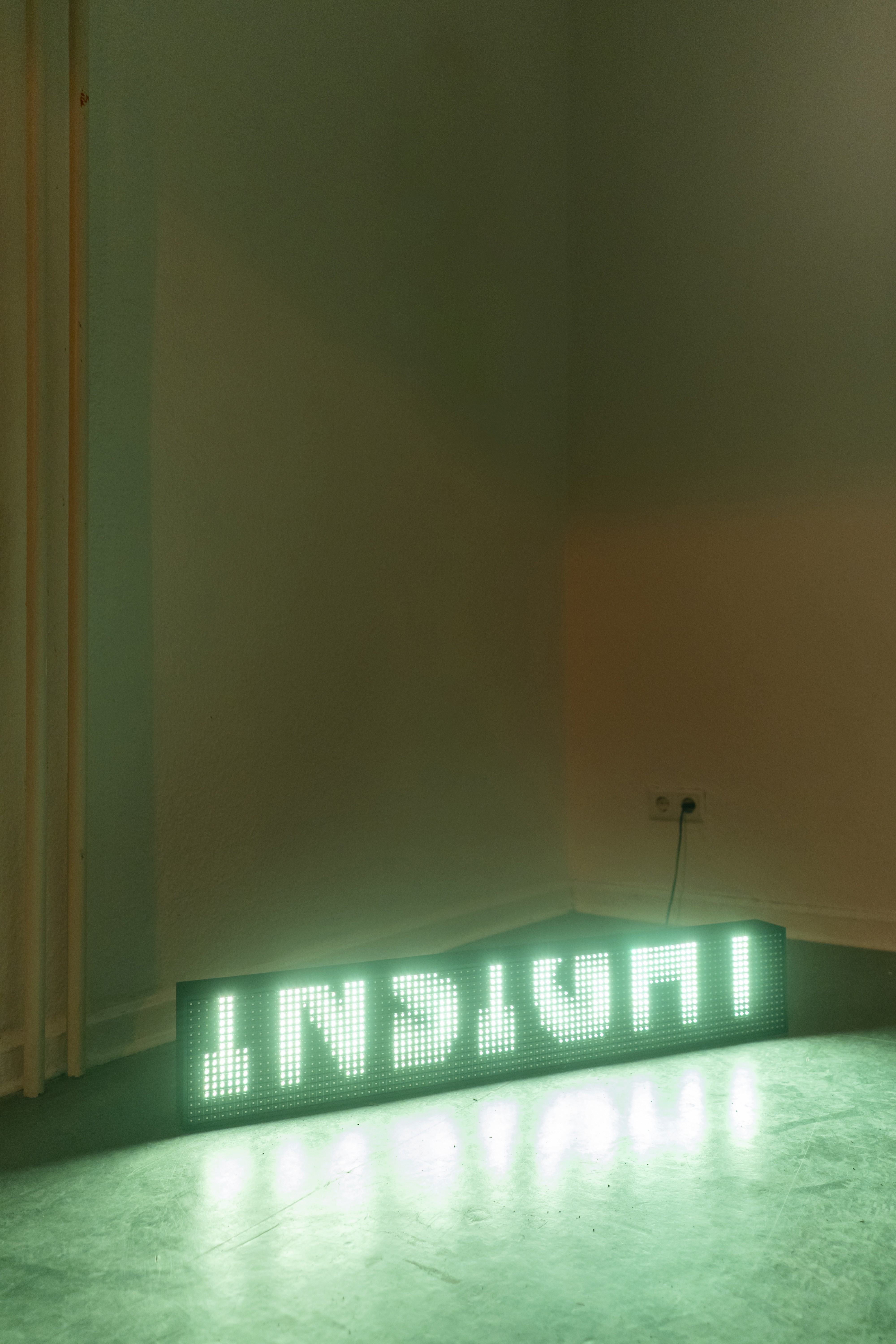
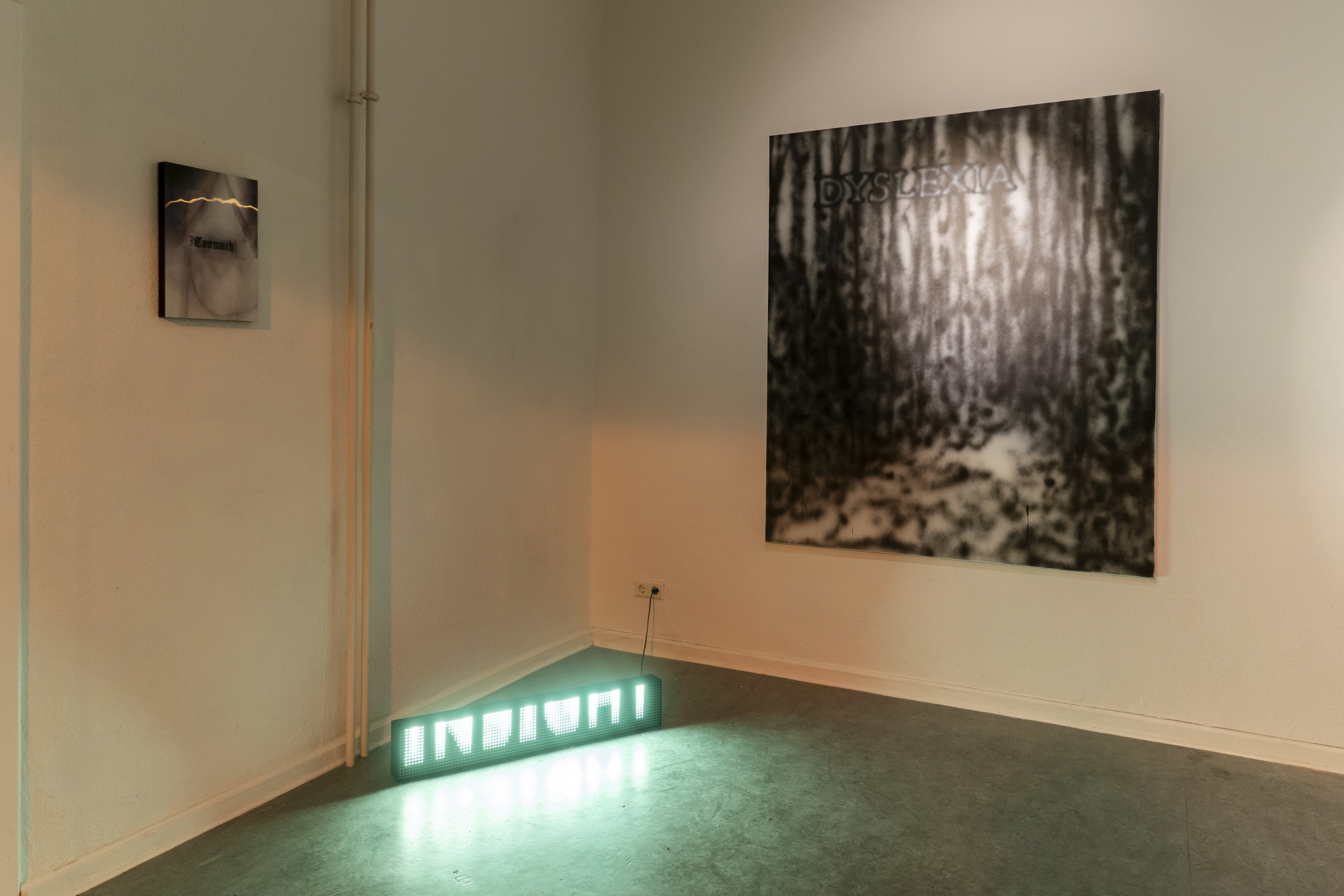
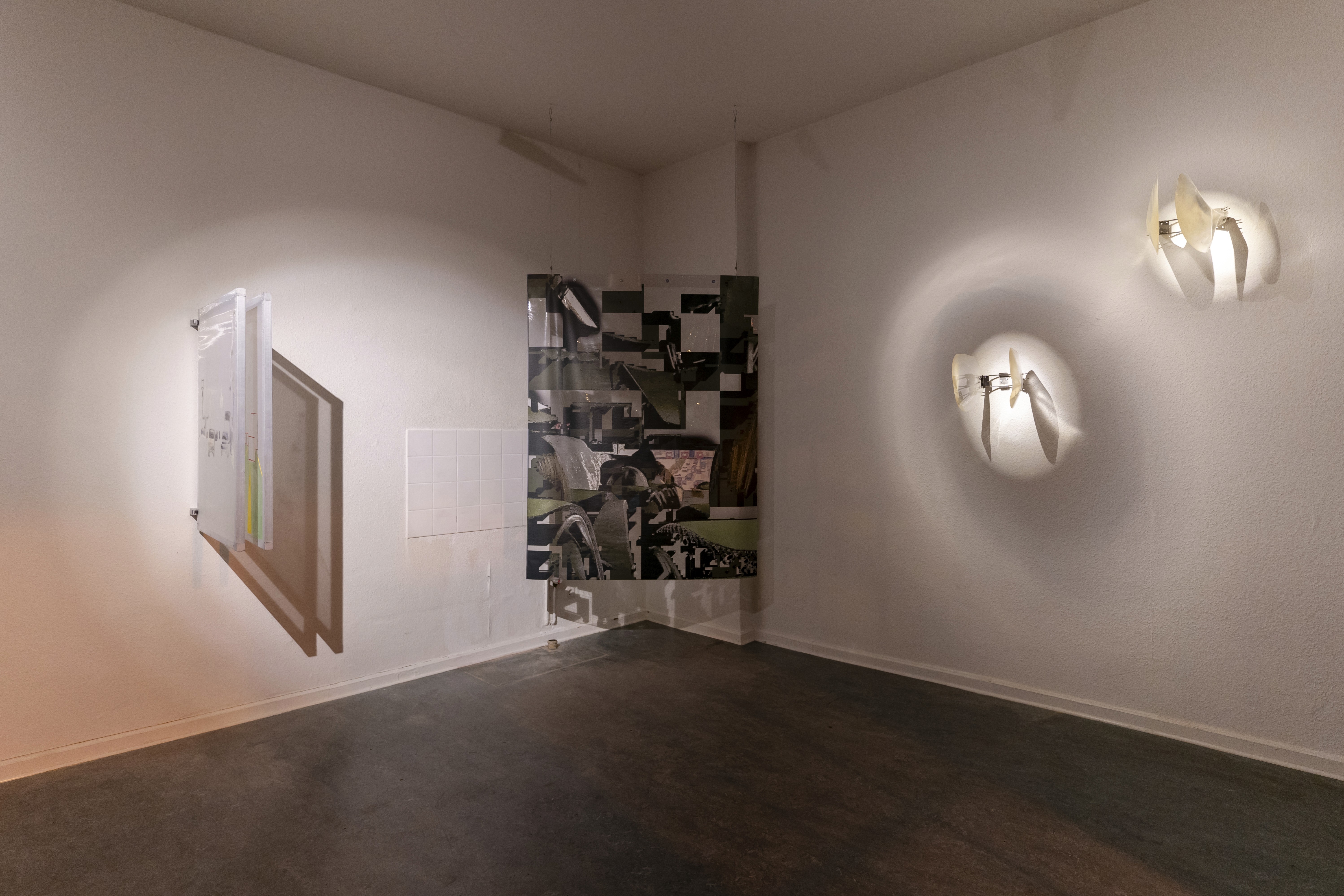
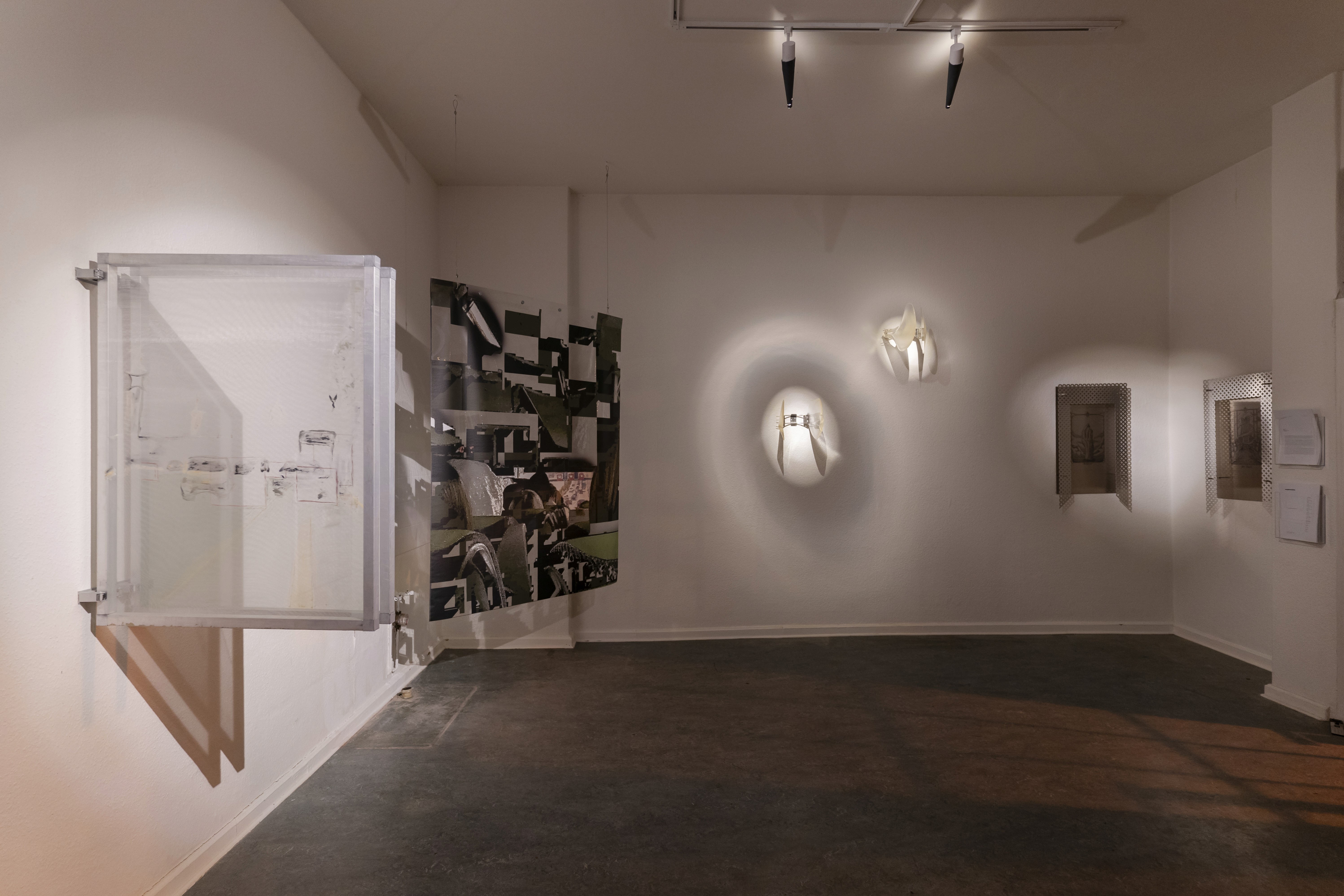
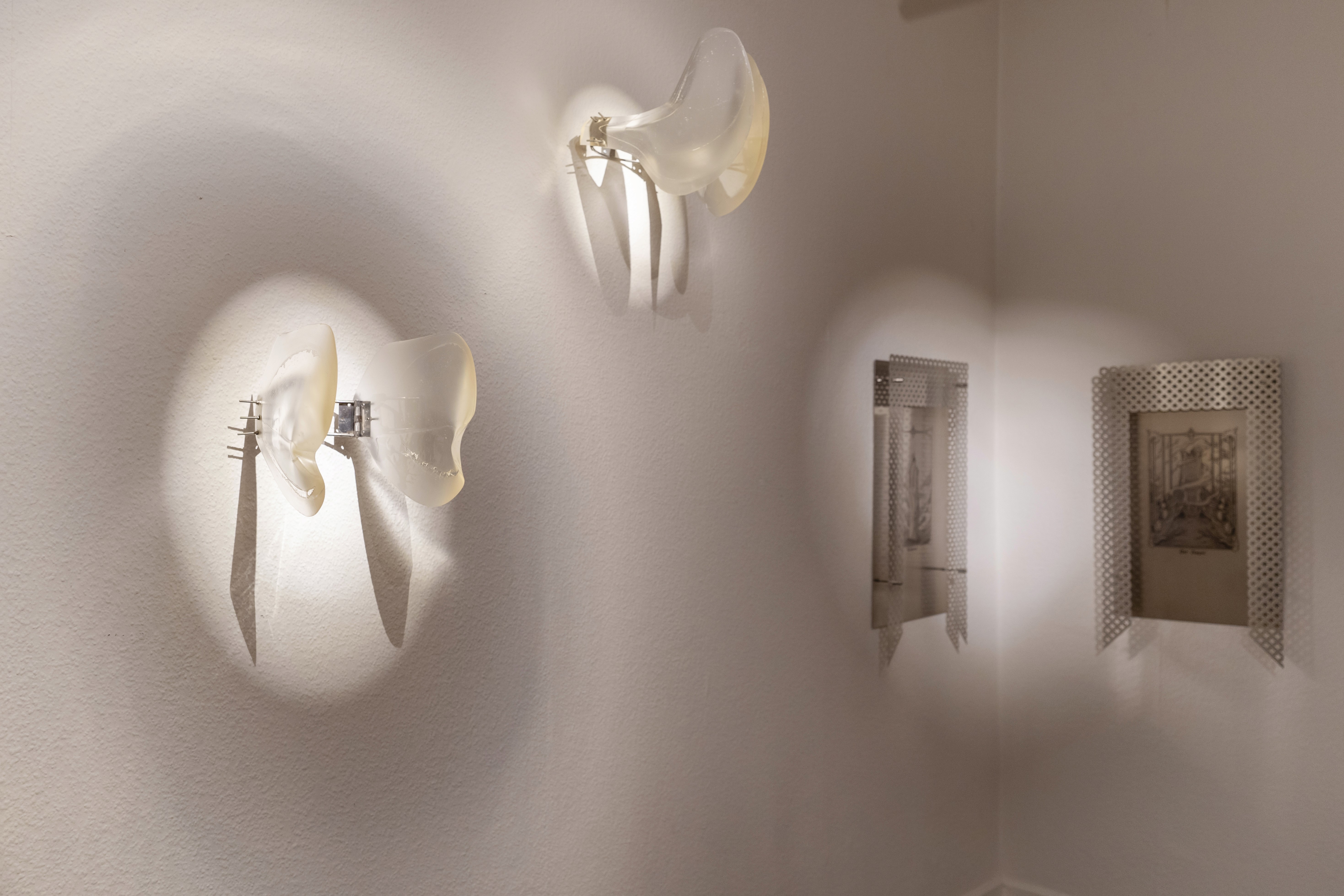
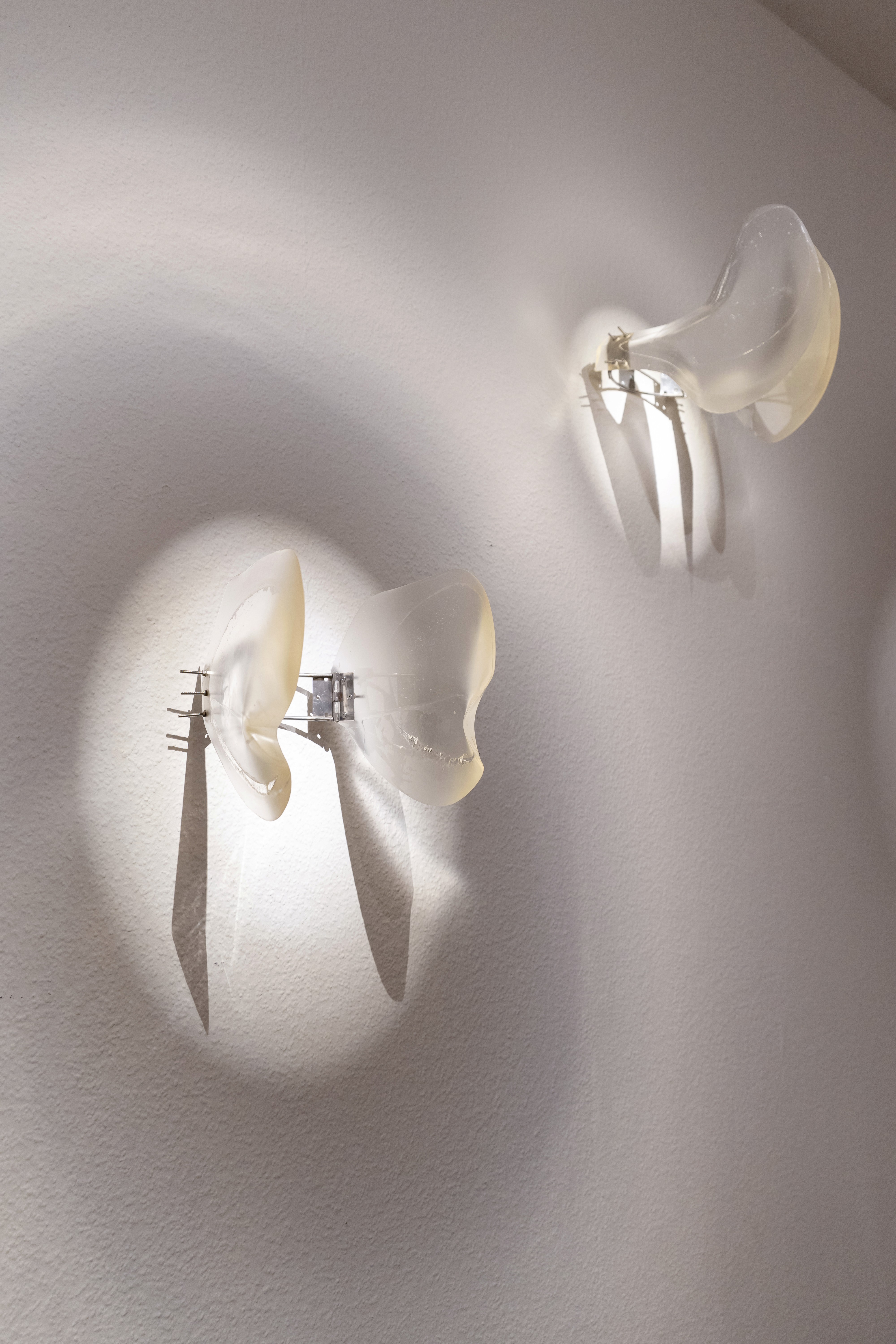
How do we manage to minimize the dizzying flow of constant information and external stimuli to an extent that we can think clearly? The artist Hannah Hallermann gives shape to the question wether the continual adjustment of our field of awareness has become an indispensable skill for our time. Her ADJUSTERS invite you to come closer, physically engage by placing your head inside, close your eyes, and, for a moment, silence external noises and triggers. Her work raises the question of how much information do we actually want to expose ourselves to? At times it seems essential to protect ourselves from all outside influences and preconceived opinions in order to create space for our very own independent thoughts and ideas. Hallermann’s INSIGHT refers to the constant flow of digital information. The flickering lettering vanishes as soon as we try to read it, reflecting on the ephemerality of digital culture and our diminishing attention span. Only when we keep looking, the bright lighting imprints on our lenses and brains. Hallermanns works offer us space to reflect on possible mechanisms to free ourselves from the nebula of irritating stimuli and fleeting digital statements.
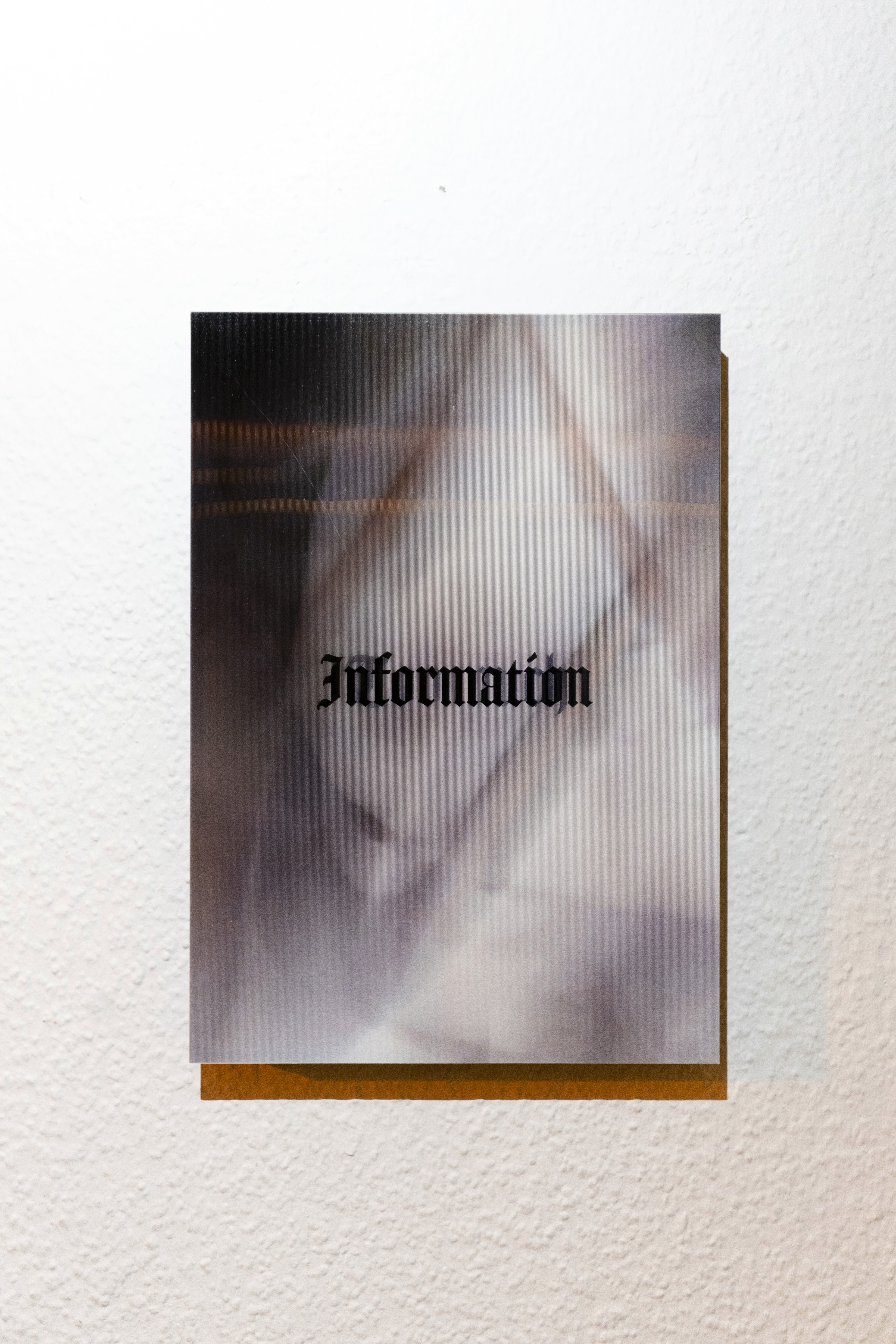
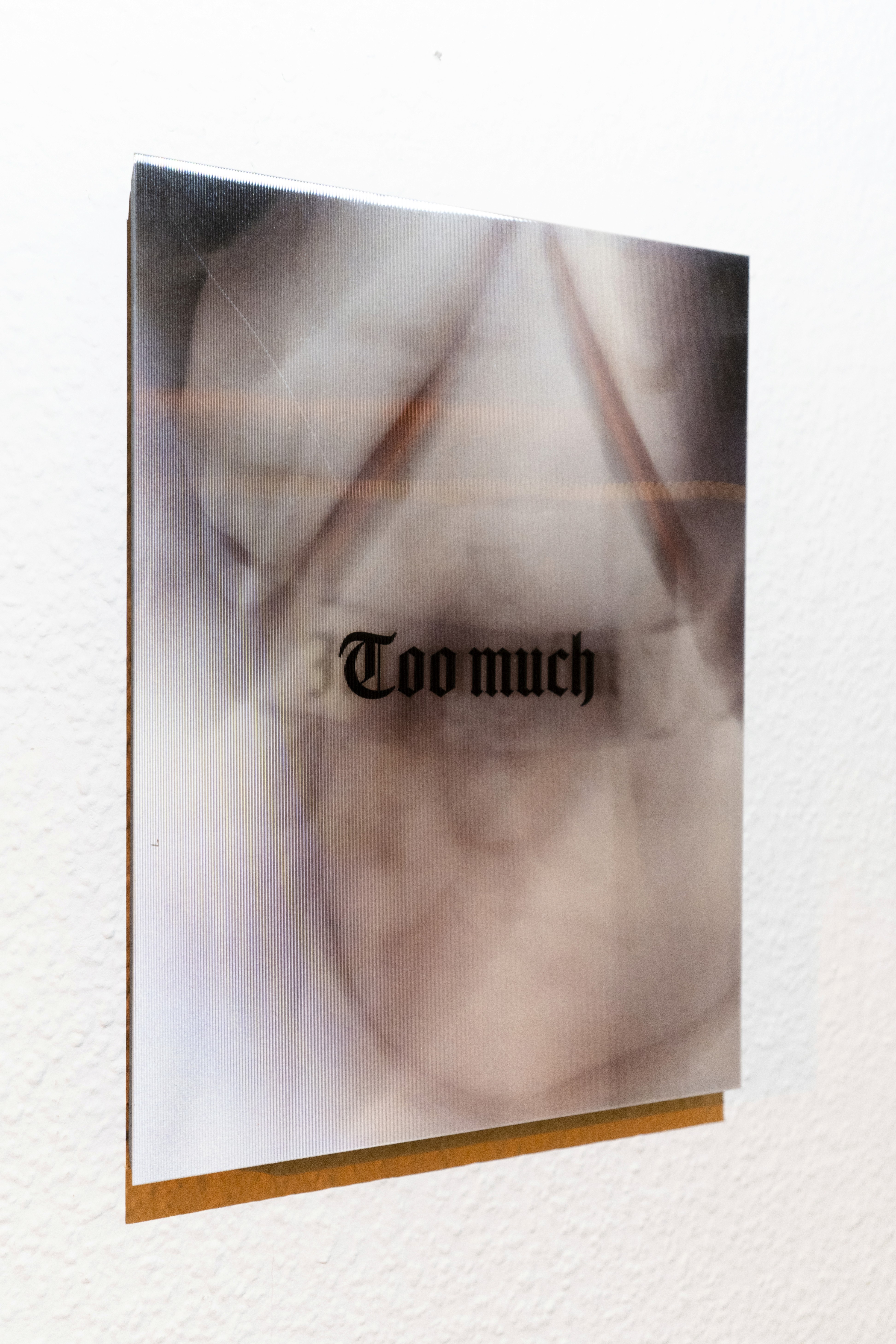
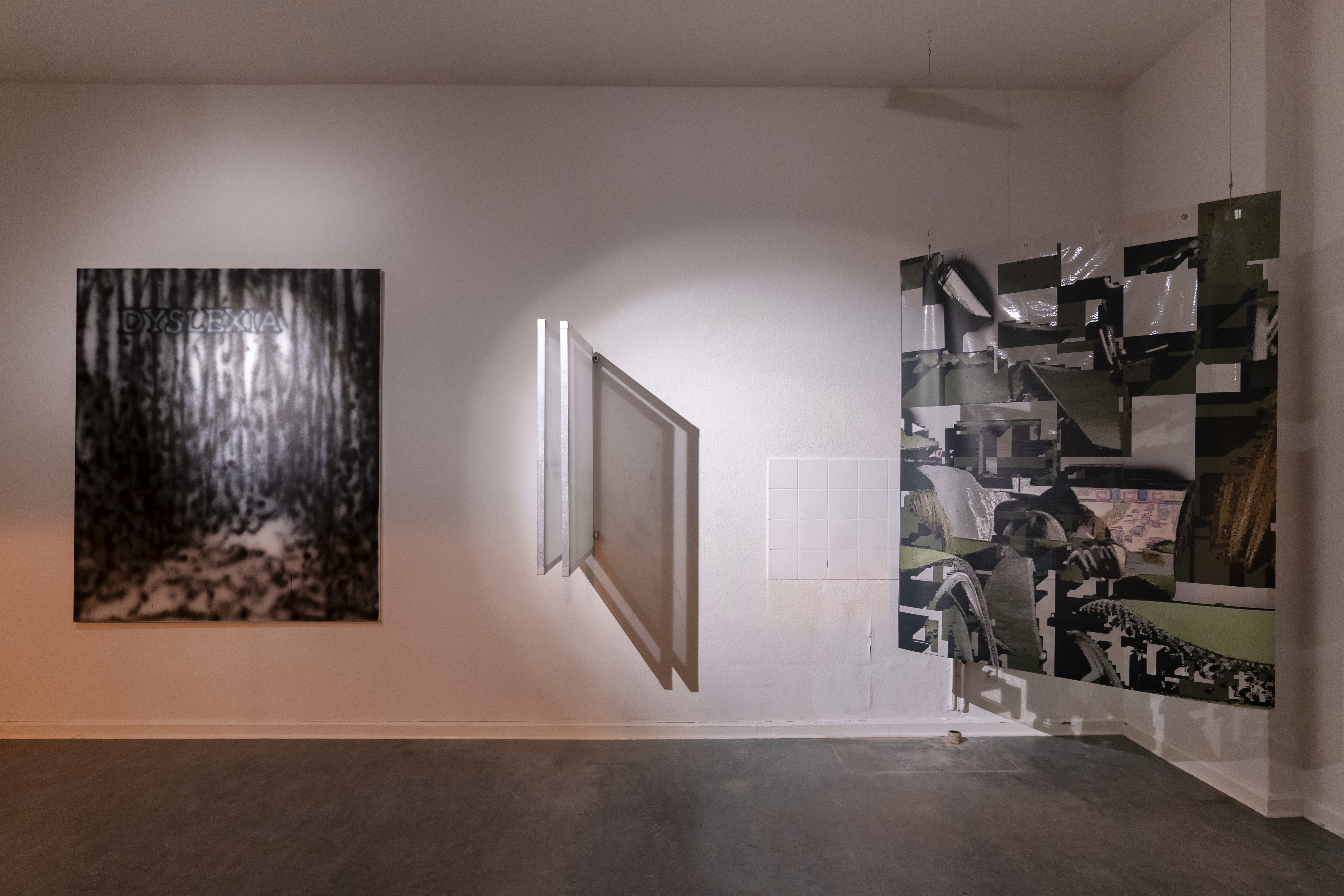
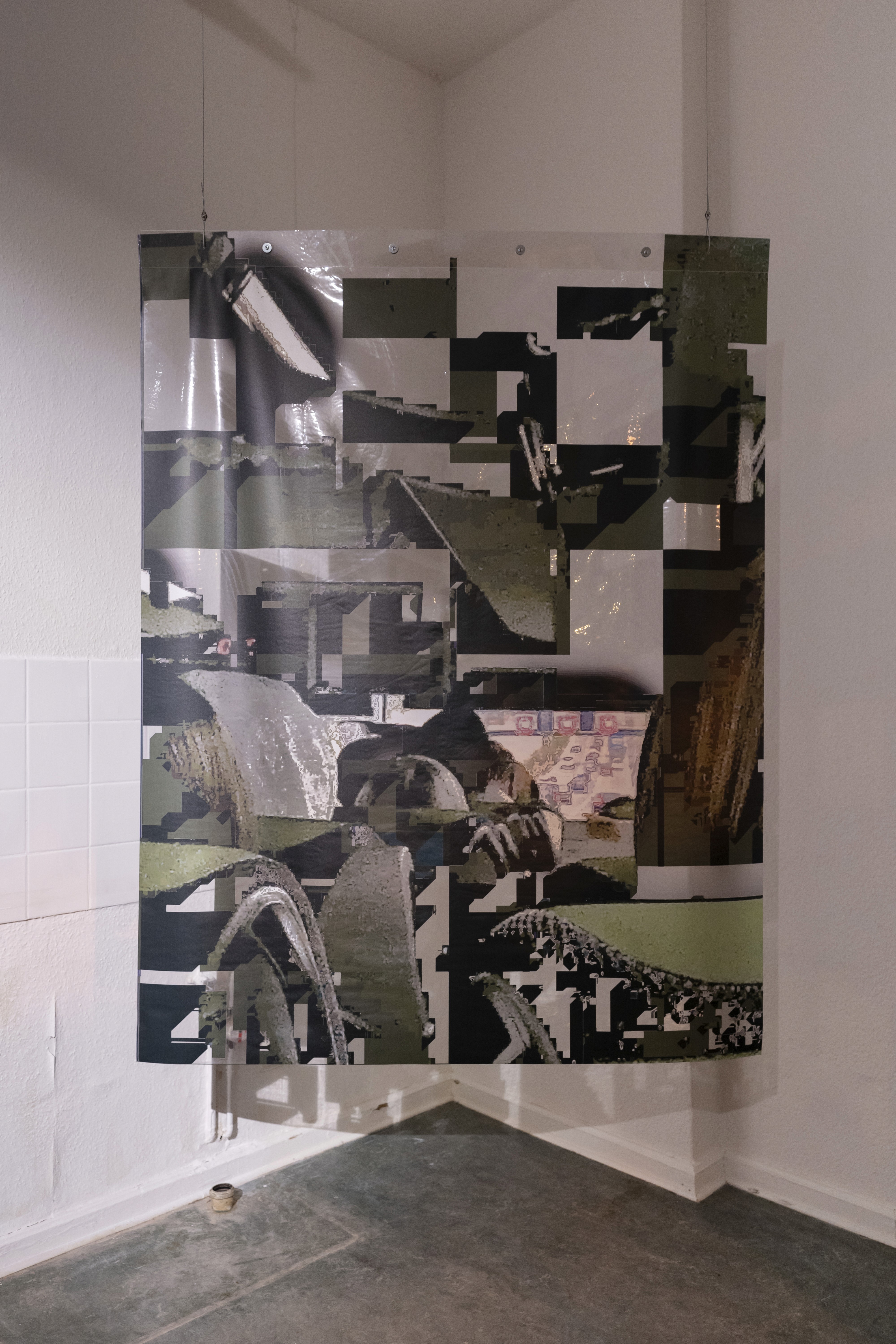
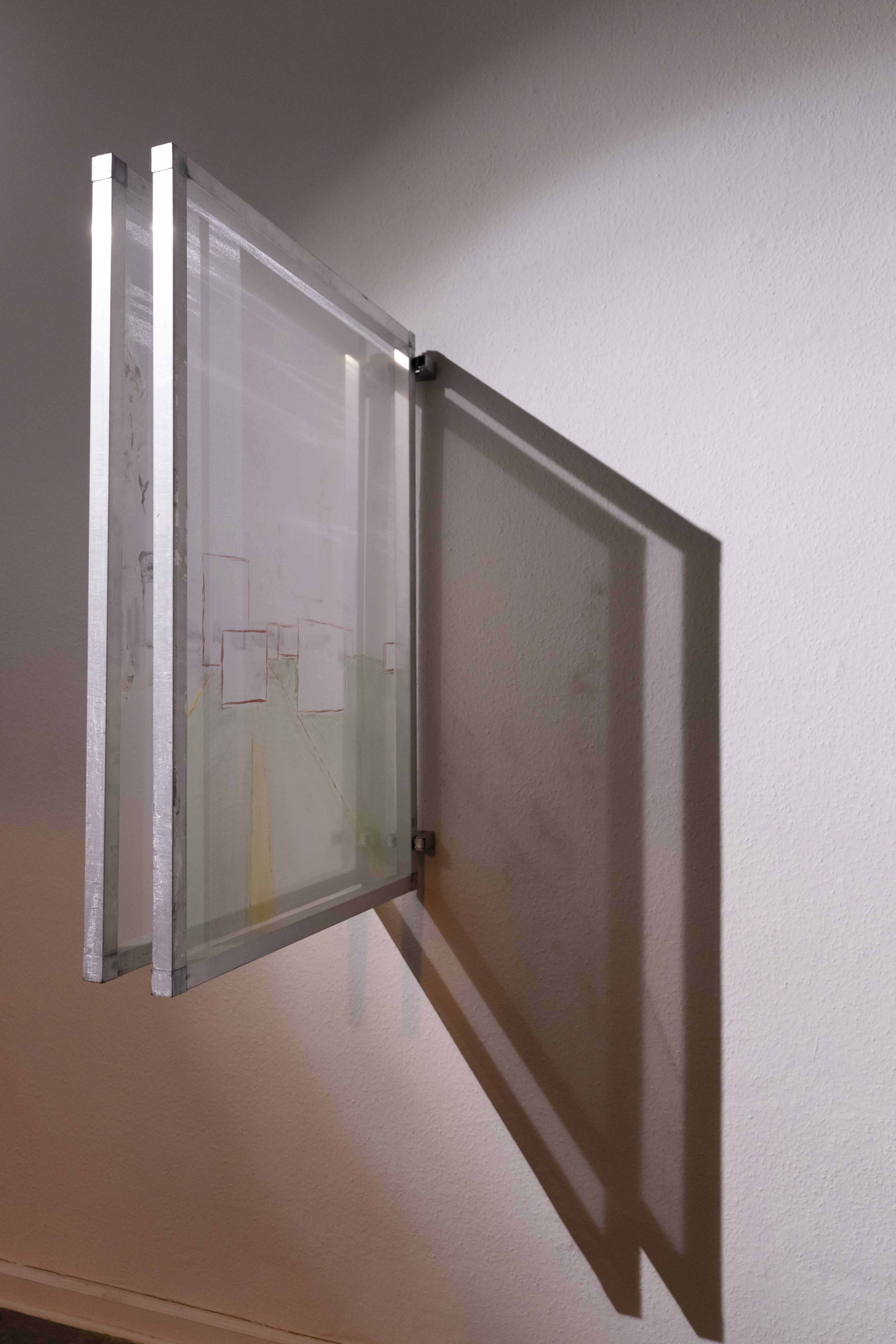
Tim Schmid’s works, how a car sees the world and does my phone see more colors than I do?, are linked to the question of whether our intuitive abilities are gradually diminishing nowadays, due to increased technological heteronomy? We live in times where technology sometimes seems to be taking away our ability to think and see autonomously. Be it in automated driving or by constantly looking through the lens of our phones. Inscrutable numbers, enigmatic images and intransparent formulas are superimposed on our eyes by technology, making us forget how to trust our own natural instincts, depriving us of independent seeing and understanding. Schmid’s layered and transparent works suggest how external devices increasingly dictate our daily lives, how the line between reality and illusion becomes sometimes blurry. The widely spread assumption that technology is more intelligent than us humans, triggers anxiety in many people, and nevertheless, we often submit to the power that technology has over us, without further questioning.
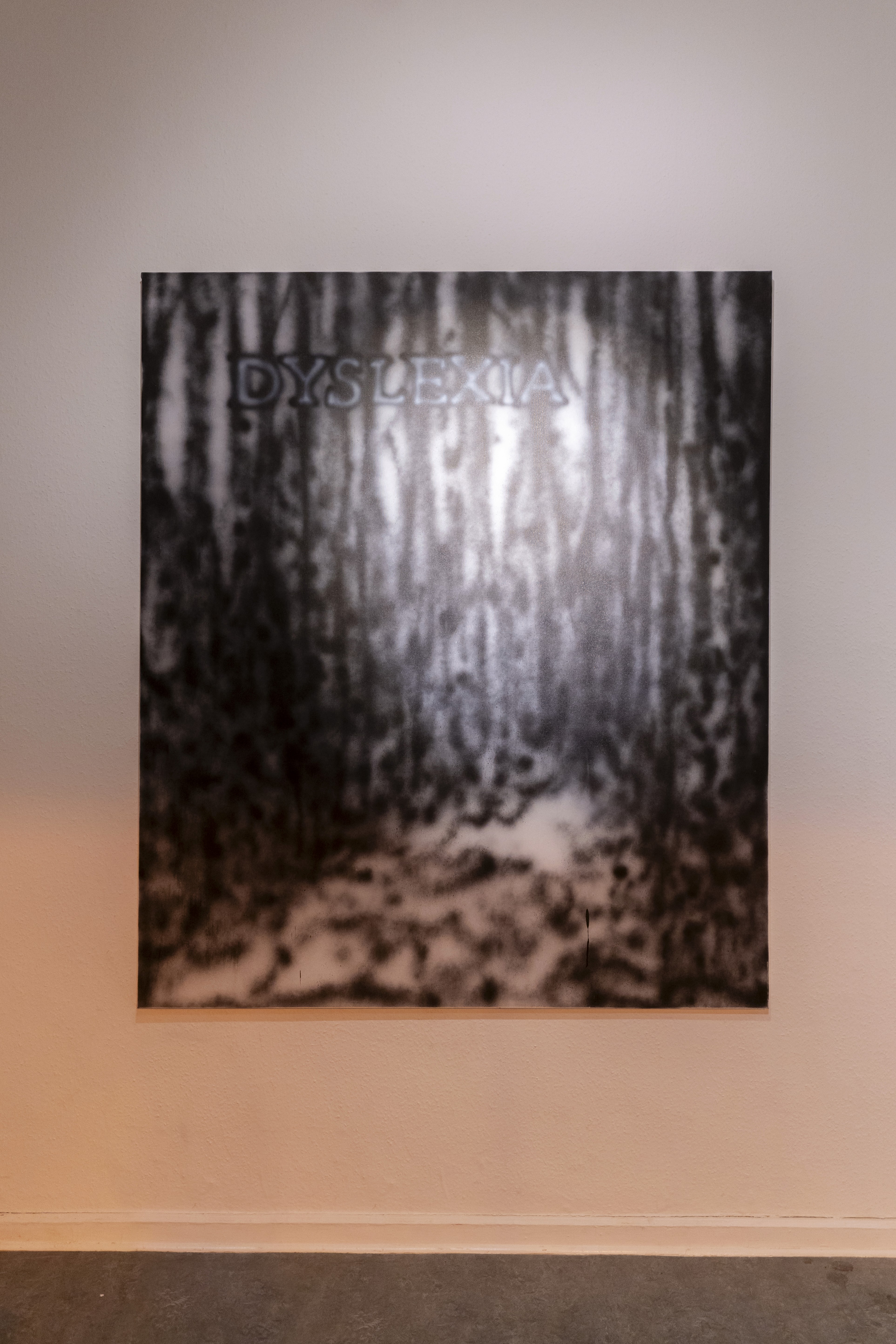
Related to Dyslexia – a condition that affects the processing of information, including seeing, hearing, reading, and writing – the Danish painter fjorsk addresses this specific difficulty through an immersive, blurred painting style, incorporating non-colors and language. His works explore mythology in contemporary culture as a mirror of ideology, today often in form of memes. The meme is, like the myth, an image – often combined with text –, detached from its original context, becoming unquestioned. The images and texts in fjorsk’s paintings are fragmented, reassembled and re-contextualized – stripping them of their original meaning and opening up a new, expanded space for interpretation. His opaque style of reusing images invites viewers to reconsider the overwhelming amount of unquestioned information we encounter every day in our digital culture.
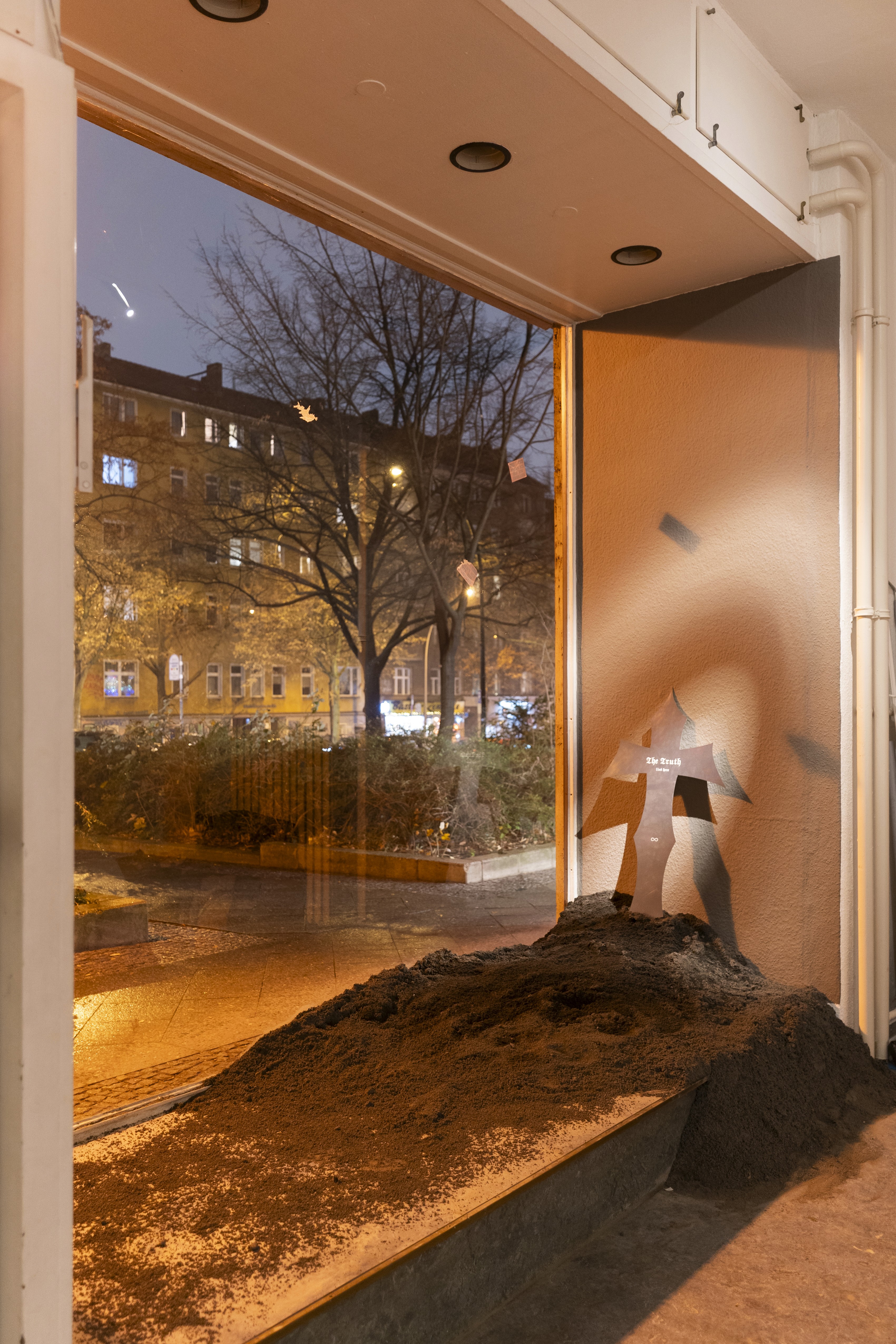
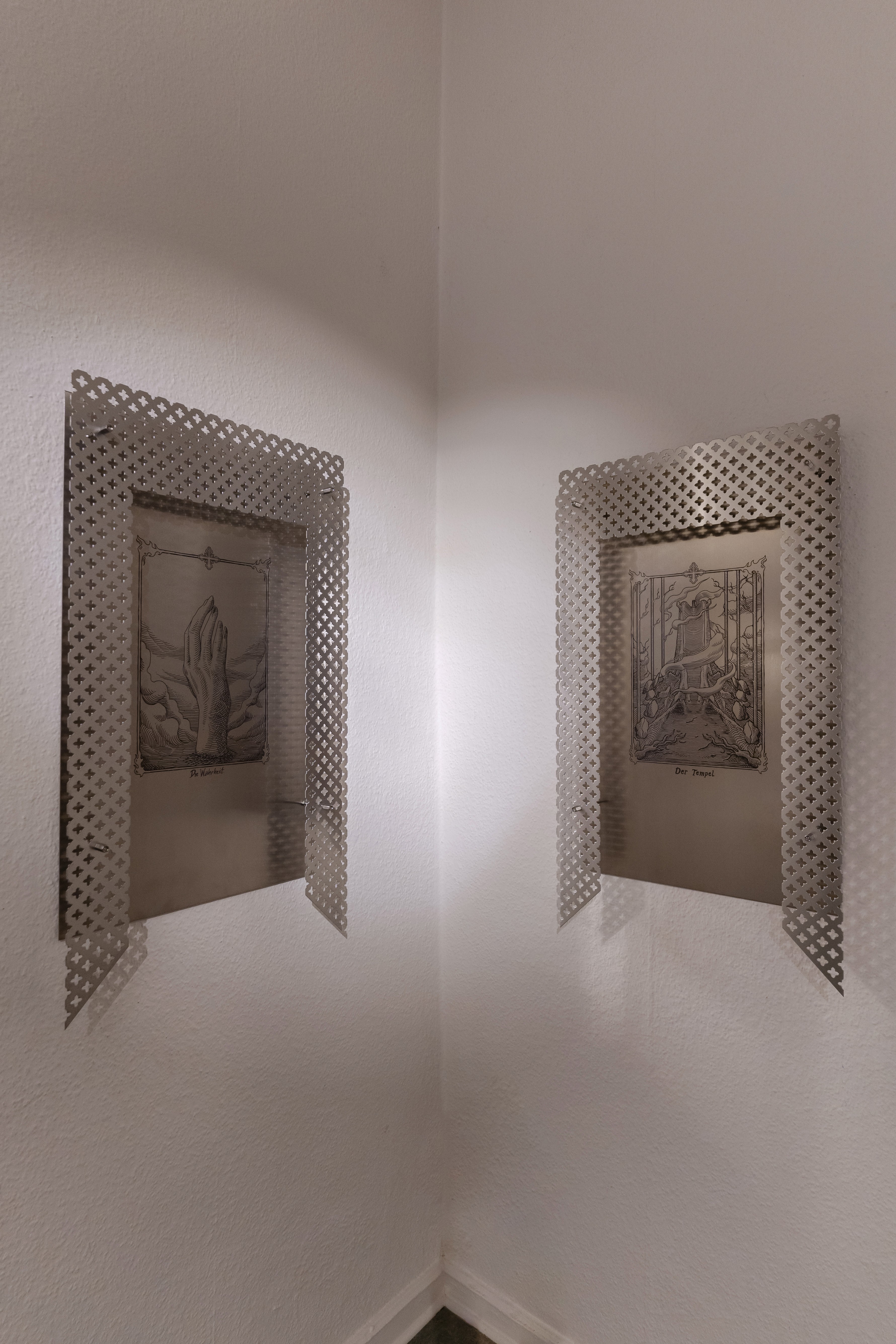
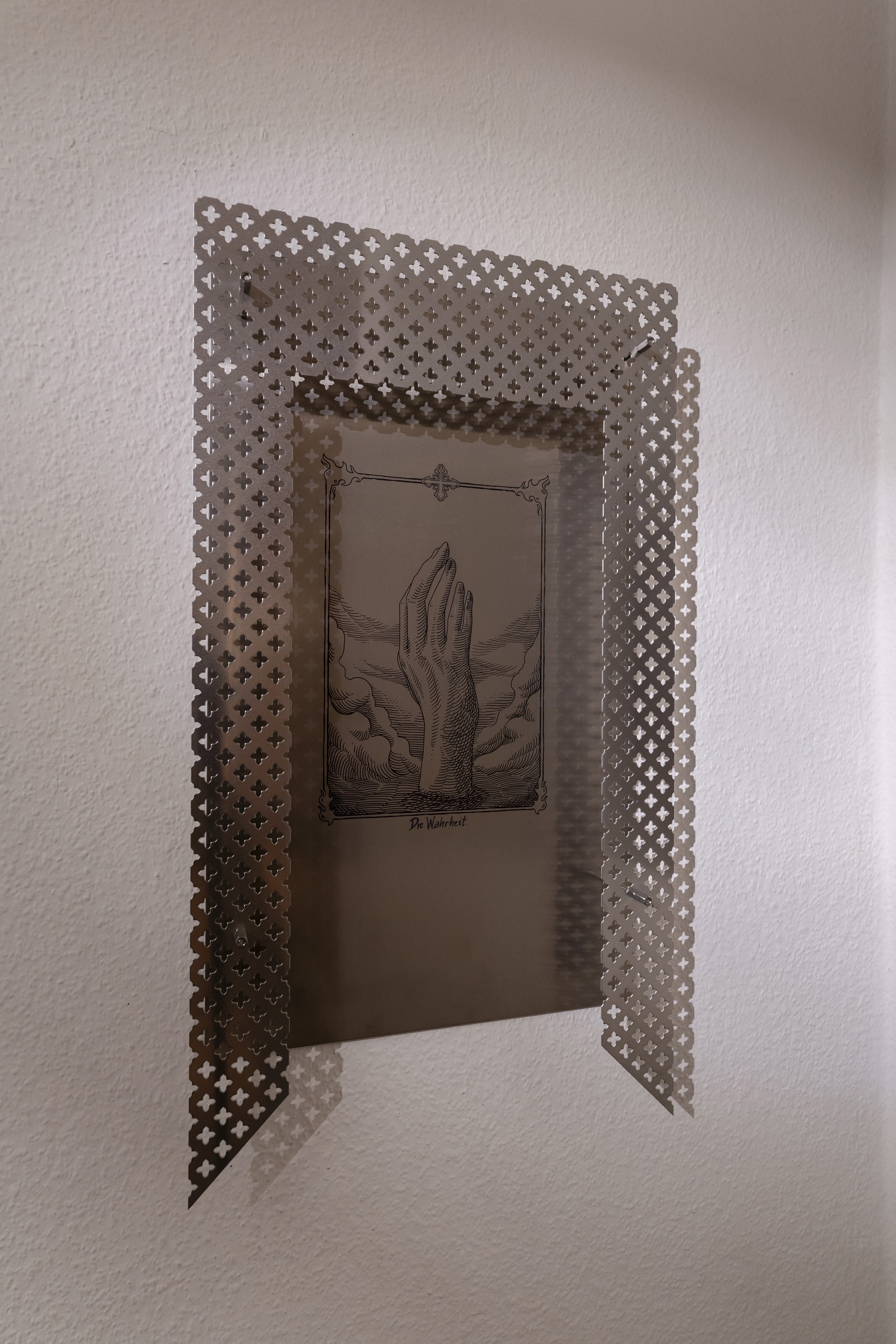
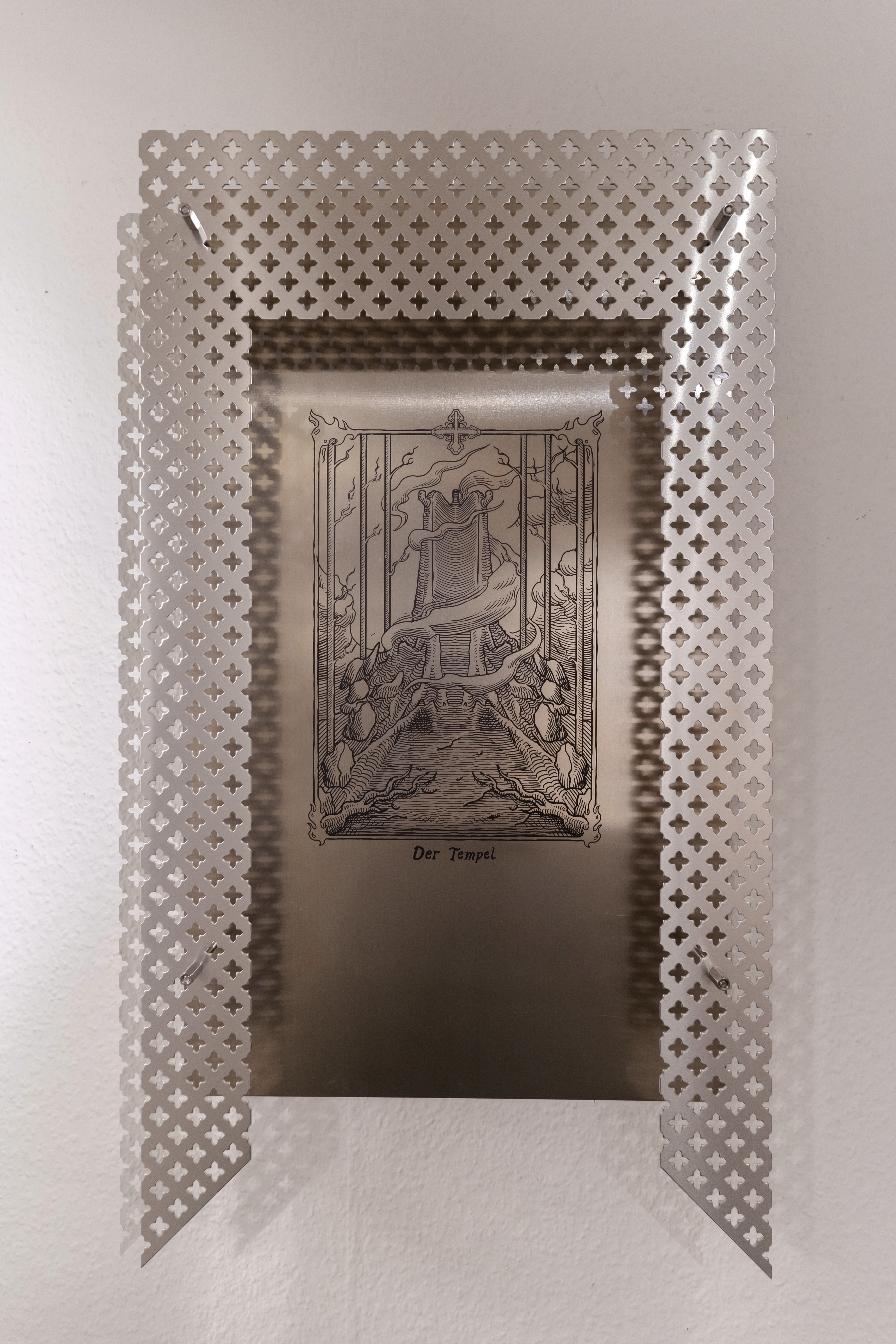
The artist Emma Adler explores the complexity of conspiratorial concepts – both in terms of religious dogma and political propaganda – and populism in her works VERITAS VERMIBUS (the truth lies here), The Deceit and The Temple. Her multimedia work, evokes a sense of eeriness and desertion, symbolizing the burial of truth – visualized by a steel cross that is dug in a heap of black sand, endlessly abandoned. The digital flood of images and information on the internet is increasingly being exploited by entities, such as the right-wing party AfD, for political propaganda and the dissemination of disinformation. In the end, we, as consumers of digital culture, are increasingly unaware of the truthfulness of images, as they often depict a distorted reality. The sheer mass of information, images, and dogmatic opinions increasingly restricts our ability to freely form our own opinions and beliefs and to (re-)gain autonomy. The truth sinks deeper and deeper into the black sand, slowly dissolves in the fog.